The cost they don't put in the press release

The Ugly

What data centers take. What communities pay. What gets left behind.

Conceptual illustration; not a photograph of an identified project.

A massive data center can change a town's future. The power demand is real. The water questions are real. So are the noise, the roadwork, the industrial equipment and the financial risk. When those costs aren't disclosed and fairly assigned, the people who live there can get the worst end of the deal.

11.8%Reference-case share of U.S. electricity that data centers could use in 2030. A national forecast, not a current measurement. [1]
17.4BGallons of water consumed on site by U.S. data centers in 2023, nationwide (66 billion liters). [2]
100–200Additional jobs in a typical studied county over the decade after its first large data center. Not a per-project figure. [3]
$1.6BEstimated cost of Virginia's data-center sales-tax exemption in fiscal 2025, as cited by Brookings. [3]

The other side of the deal

It's not just a building.
It's a permanent demand.

The biggest developers arrive with renderings, economic forecasts and promises of opportunity. A community must also know exactly what its power system, water supply, roads, neighborhoods and tax base are being asked to provide.

American Public Voice's position

We're not against building. We're against being steamrolled. If the development makes sense, put the full costs on the table, protect the people living with them, and negotiate a return that lasts.

Six ways a bad deal can drain a town

The real community cost

Every site is different. These are the risks local officials must examine, not outcomes to assume without evidence.

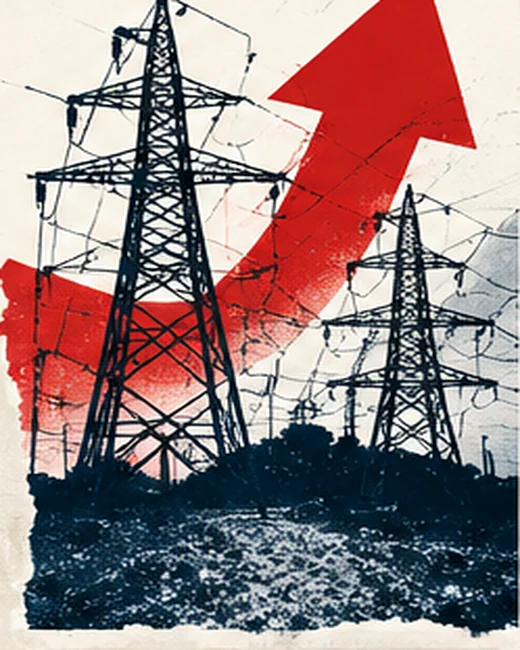
Editorial illustration of electrical transmission towers near an industrial campus
01 / Power

Grid & household costs

The power bill you didn't agree to

Data centers can require new generation, substations and transmission capacity. Without protective electricity tariffs and enforceable commitments, some infrastructure costs or underused investments can be passed to other customers. That risk is recognized in federal laboratory research; it is not a claim that every facility automatically raises bills. [4]

Demand: Full load forecasts, who funds new infrastructure, financial collateral, and protections for households and small businesses.
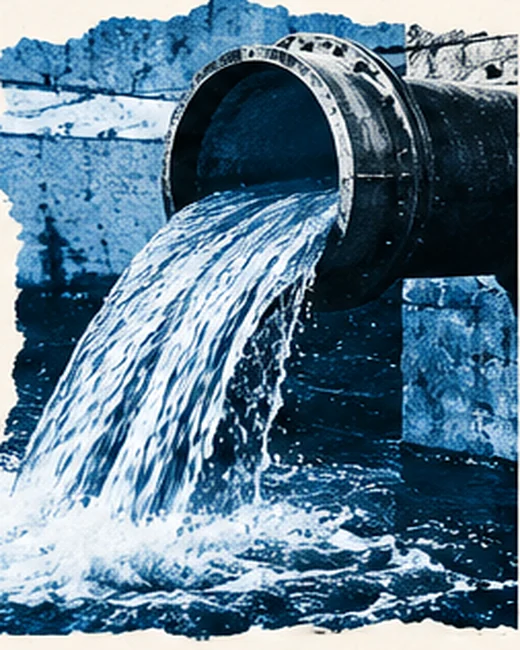
Editorial illustration of an industrial water discharge channel
02 / Water

Aquifers & water systems

The water you can't afford to lose

Evaporative cooling can consume substantial water, and the electricity a facility uses carries a separate, indirect water footprint. Berkeley Lab estimated about 66 billion liters of on-site water consumption and nearly 800 billion liters of indirect consumption nationwide in 2023. A specific project's impact depends on its cooling design and location. [2]

Demand: Public water budgets, seasonal peak estimates, drought safeguards, source verification, and a preference for non-potable or recycled supplies where feasible.
Editorial illustration of fenced industrial data-center buildings
03 / Noise

Quality of life

The hum that never clocks out

Cooling fans, chillers, generators and construction traffic can affect neighbors, especially near homes or schools. Residents in Northern Virginia have documented conflicts over proximity and persistent industrial sound. Actual effects depend on site design and setbacks. [5]

Demand: Independent day and night acoustic testing, low-frequency noise limits, enforceable buffers, complaint-response deadlines, and operating restrictions.
Editorial illustration of industrial exhaust stacks and haze
04 / Air

Backup power & local air

The diesel backup next door

Many facilities use diesel-fired emergency generators. They normally run for testing, maintenance or outages rather than continuously, but they still need permits because of their emissions. One California data-center proposal now under review lists 40 diesel generator sets for backup service. [6]

Demand: Public equipment counts, emissions permits, operating-hour limits, fuel-storage safety plans, and consideration of lower-emission alternatives.
Editorial illustration of a bulldozer grading a large construction site
05 / Land

Neighborhoods & infrastructure

The town that gets rebuilt around it

Large campuses can change land use, tree cover, traffic patterns, drainage, views and the character of nearby neighborhoods. Construction brings jobs, but also heavy equipment and road impacts. Residents shouldn't discover the full footprint after the zoning vote. [5]

Demand: Traffic and stormwater plans, truck-route restrictions, landscape buffers, community hearings, and project-funded road repairs.
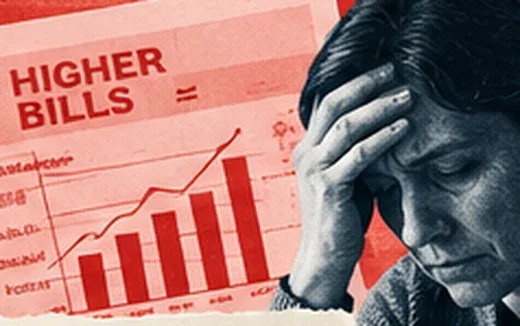
Editorial illustration of a rising utility-bill chart beside a worried resident
06 / Money

Jobs, incentives & public return

The payoff that may never reach you

Data centers do create jobs and sometimes major tax revenue, but permanent hiring can be modest relative to their scale. Brookings estimates roughly 100–200 additional jobs in a typical studied county after its first large center, and finds wages largely unchanged. Tax abatements should be weighed against verified long-term benefits. [3]

Demand: Audited fiscal projections, binding local-hiring targets, transparent incentives, community-benefit agreements, and end-of-life financial assurances.

Follow the cost

Big corporate demand.
Who holds the risk?

A project needs power, water, land, utility connections, emergency access and public approvals. Those needs aren't inherently bad, but someone has to pay for them. A weak contract can leave residents exposed to costs they never voted to accept.

What the project requires

Power · Water · Land

Capacity, supply, infrastructure, zoning, road access, emergency response and a reliable long-term operating environment.

What a bad deal can shift to the community

Bills · Risk · Disruption

Under-recovered utility investments, groundwater pressure, traffic, noise, forgone taxes, or uncompensated public-service burdens.

How large these risks are depends on a facility's technology, utility tariff, location, project design and negotiated obligations. Good policy can mitigate every one of them.

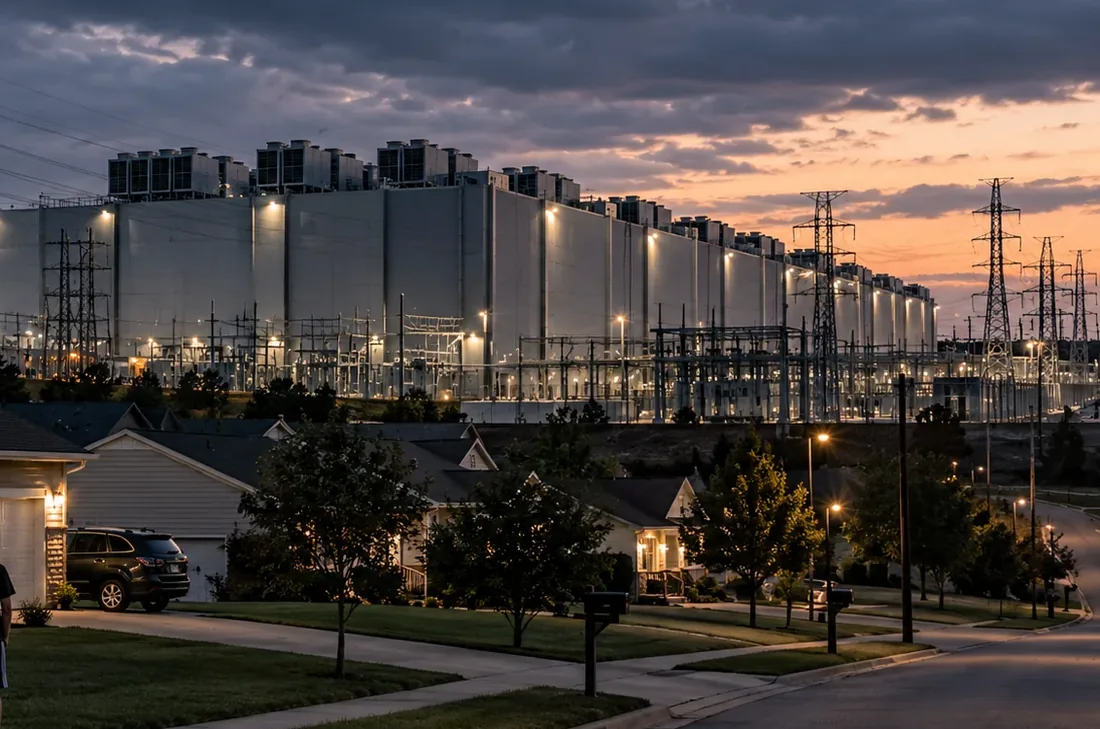
Conceptual illustration of a data center campus rising behind a row of houses at duskReal communities. Real questions.
Conceptual illustration; not a photograph of the Fairfax County site.

This is not hypothetical

When an industrial campus becomes your neighbor

In December 2024, The Associated Press reported on Plaza 500, a proposed 466,000-square-foot data center and electrical substation in Fairfax County, Virginia, planned a few hundred feet from townhomes, playgrounds and a community center. Residents raised concerns about strain on the power grid, water use and emissions from diesel generators. Neighbors organized against the project and were largely unsuccessful; the stricter data-center zoning rules the county later adopted did not apply to it. [5]

That is the question every town deserves to ask before approvals are granted, not after the concrete arrives.

Read the AP reporting ↗

The Good Neighbor Test

No blank check.
No secret deal.

Before the first permit is signed, the public should be able to answer these questions. If a developer wants the community's resources, the community deserves enforceable terms.

  • Show the load: What is the maximum expected power demand, and who pays for new capacity?

  • Protect local bills: Will the applicant post security and accept terms that prevent cost shifting?

  • Disclose the water: What are the daily and peak water consumption, the source, and the drought plan?

  • Measure the noise: What will residents hear at the property line, especially at night?

  • Count the generators: How many, what type, and what emissions and testing limits apply?

  • Price the public impact: Who fixes roads, funds the services the project needs, and covers future removal?

  • Verify the jobs: How many are construction-only? What are the binding permanent-job commitments?

  • Publish the deal: What taxes, exemptions, community payments and enforcement clauses apply?

Be a good neighbor.
Or answer to the people who live here.

Build it right. Be heard. Get compensated. Put waste energy to good use. The community that supplies the resources should have a say and a share in what gets built.

See the research and facts ↓

Verify the claims

Evidence, not hype.

Every number on this page is labeled by geography, year, and whether it is a measurement, an estimate or a forecast. Visuals are conceptual illustrations, not documentary photographs.

  1. Lawrence Berkeley National Laboratory (June 2026). United States Data Center Energy Usage Report: 2025 Update. Reference case: 649 TWh, or 11.8% of U.S. electricity, in 2030; modeled range 9.5–15.3%. Data centers used 4.7% of U.S. electricity in 2024. National forecast, not a current measurement.
  2. Lawrence Berkeley National Laboratory (December 2024). 2024 United States Data Center Energy Usage Report. On-site water consumption of about 66 billion liters nationwide in 2023 (about 17.4 billion U.S. gallons) and nearly 800 billion liters of indirect consumption through electricity generation. Nationwide annual totals, not per facility.
  3. Brookings (May 2026, updated August 2026). New evidence on data center employment effects. Bahar and Wright. Roughly 100–200 additional jobs in a typical studied county in the decade after its first large data center, depending on facility type; wages unchanged; home prices up 2–5%. Cites an estimated $1.6 billion cost for Virginia's data-center sales-tax exemption in fiscal year 2025. Averages for studied communities, not universal outcomes.
  4. Berkeley Lab (August 2026). Electricity Rate Designs for Large Loads: Evolving Practices and Opportunities, 2026 Update. Operational and financial risks of large loads, including underutilized investments that can affect all customers, and how large-load tariffs and electric service agreements address them.
  5. The Associated Press (December 5, 2024). As data centers proliferate, conflict with local communities follows. Bedayn and Merica. The Plaza 500 proposal in Fairfax County, Virginia: a 466,000-square-foot data center and electrical substation a few hundred feet from townhomes, playgrounds and a community center; resident concerns about grid strain, water and generator emissions.
  6. California Energy Commission (2026). RB Inyokern Data Center, Docket 26-SPPE-01. Kern County. Backup generating system of 40 diesel-fired generator sets rated 3 MW each, up to 99 MW. Status: under review. A proposed project, not an operating site. See also the Commission's data-center permitting page.
Editorial note. We do not label any company good or bad here; we describe what has been disclosed, what has been measured and what has not. Data centers can strain a grid, a water system or a road network. Whether a particular project does depends on its design, its contracts and local policy. Reviewed for sourcing and tone by American Public Voice staff. Last fact-checked October 15, 2026.
Part three of the series:The GoodThe BadThe UglyGood Neighbor Standard →

We need your help now.

Data center decisions are being made this fall in county chambers and utility dockets across the country. Your contribution puts sourced information, a public survey and a project-by-project record in front of the people who will live with them.

Contribute to American Public VoicePaid for by American Public Voice PAC. Not authorized by any candidate or candidate's committee.